
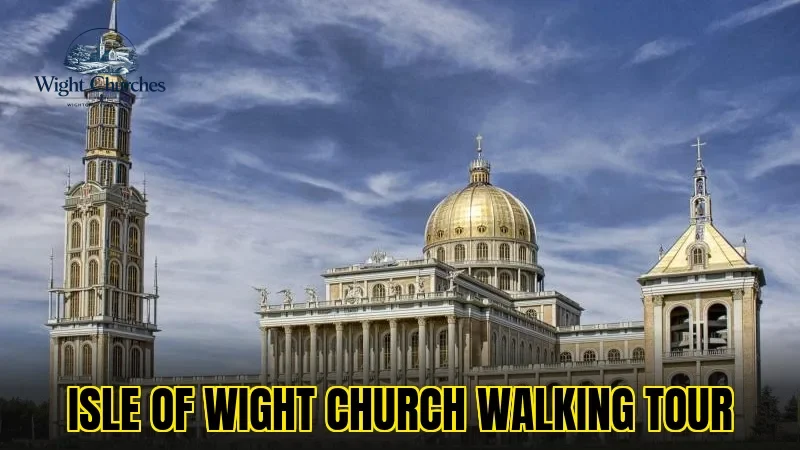
If you’re looking for a meaningful way to explore one of England’s most scenic islands, an isle of wight church walking tour offers an unmatched blend of history, architecture, and natural beauty. The Island is home to dozens of ancient parish churches, many dating back to the Norman era, each tucked into charming villages, coastal cliffs, or rolling countryside. Whether you’re a history enthusiast, a casual walker, or a spiritual seeker, this guide will walk you through everything you need to know to plan a rewarding and memorable journey through the Island’s sacred heritage.
Why An Isle Of Wight Church Walking Tour Is Worth Every Step
The Isle of Wight is often celebrated for its beaches and sailing culture, but its ecclesiastical landscape is equally compelling. An isle of wight church walking tour allows visitors to connect with centuries of local history in a way that no museum exhibit can replicate. The churches here are living monuments — many still holding regular services — embedded within communities that have shaped the Island’s identity for over a thousand years. Walking between them gives you an intimate perspective on how geography, faith, and community have intertwined across generations.
The Historical Significance Of Island Churches
The Isle of Wight’s churches represent a remarkably continuous thread of Christian worship stretching back to at least the seventh century. Many of the current buildings incorporate Saxon stonework, Norman arches, and medieval additions that have been carefully preserved over the centuries. St. Mildred’s Church in Whippingham, for example, carries royal associations with Queen Victoria, while St. Catherine’s Oratory near Niton stands as one of the oldest surviving medieval lighthouses in England, originally built as a chantry chapel. Each building carries its own story, and an isle of wight church walking tour is the ideal way to encounter these narratives firsthand.
What Makes Walking The Best Way To Experience These Sites
Driving between churches is certainly possible, but it fundamentally changes the experience. Walking forces you to slow down, observe the landscape, and notice the subtle transitions between habitats and settlements. You become aware of why a particular church was sited on a hillside, how a village grew around its parish boundary, or why a remote chapel stands alone in a field far from any road. The isle of wight church walking tour format encourages a kind of contemplative attention that motorised travel simply cannot provide. It is, in many ways, the closest modern equivalent to the medieval pilgrimage tradition that once animated these routes.
Seasonal Highlights Along The Routes
Each season brings its own rewards to anyone undertaking an isle of wight church walking tour. Spring sees churchyards filled with primroses, bluebells, and returning birdsong, making even a short walk between two neighbouring parishes feel like a celebration of renewal. Summer offers long daylight hours and open church doors, with many buildings hosting exhibitions or guided tours. Autumn transforms the woodland sections into vivid colour, while winter strips back the foliage to reveal architectural details often hidden by vegetation. There is genuinely no bad time to undertake these walks, though spring and early autumn tend to offer the most comfortable conditions for longer routes.
Planning Your Isle Of Wight Church Walking Tour: Routes, Distances, And Key Churches
Effective planning is essential to getting the most from any walking tour, and the Island’s church routes reward careful preparation. The Isle of Wight has over forty ancient parish churches, distributed across the Island in a pattern that reflects centuries of settlement and land ownership. Some are clustered within easy walking distance of each other, while others require more ambitious day walks to connect. Understanding the geography before you set out will help you design a route that matches your fitness level, available time, and particular interests.
| Church Name | Location | Key Feature | Walking Distance To Next |
|---|---|---|---|
| St. Mary the Virgin | Carisbrooke | Norman tower, medieval font | ~2.5 miles to Newport |
| St. Thomas of Canterbury | Newport | Princess Elizabeth memorial | ~3 miles to Arreton |
| St. George | Arreton | Saxon origins, ancient yew tree | ~4 miles to Brading |
| St. Mary the Virgin | Brading | Oglander tombs, medieval brass | ~2 miles to Yaverland |
| St. John the Baptist | Yaverland | Norman doorway, rural setting | ~5 miles to Godshill |
| All Saints | Godshill | Lily Cross painting, hilltop position | ~3.5 miles to Shorwell |
| St. Peter and St. Paul | Shorwell | Rare medieval wall paintings | ~4 miles to Brighstone |
The Isle Of Wight Church Walking Tour Central Route
The central route connecting Carisbrooke, Newport, and Arreton is widely considered the most accessible introduction to the Island’s church heritage. Starting at the impressive Norman tower of St. Mary the Virgin in Carisbrooke, walkers follow field paths and quiet lanes through the heart of the Island before reaching the medieval grandeur of Arreton’s St. George. This section of the isle of wight church walking tour covers approximately six miles in total and is well suited to walkers of moderate fitness. The terrain is largely gentle, with only a few short climbs, and the paths are well-marked throughout.
Southern Coastal Church Routes
For those seeking more dramatic scenery, the southern coastal routes linking Shorwell, Brighstone, and Mottistone offer a compelling combination of clifftop walking and ancient architecture. The Church of St. Peter and St. Paul in Shorwell contains some of the finest surviving medieval wall paintings on the Island, depicting St. Christopher carrying the Christ child — a remarkably vivid survival from the fifteenth century. Continuing westward along the coastal path to Brighstone and then inland to Mottistone, walkers pass through landscapes that feel genuinely timeless. This section of the isle of wight church walking tour is slightly more demanding but rewards effort with outstanding views across the English Channel.
Practical Tips For Making The Most Of Your Church Walking Experience
Preparation makes a significant difference to the quality of any walking tour, and the Isle of Wight’s church routes are no exception. The Island’s weather can be changeable even in summer, so carrying a waterproof layer is always advisable. Good walking footwear is essential, particularly on the coastal and downland sections where paths can become muddy after rain. A detailed Ordnance Survey map of the Island — specifically the OS Explorer OL29 — is invaluable for navigating between churches, as some connecting paths are not always obvious on the ground.
- Check church opening times in advance, as many rural churches are locked outside of service hours but hold key details on their noticeboards
- Download offline maps before you set out, as mobile signal can be unreliable in some rural areas
- Carry water and snacks, particularly on longer routes where villages with shops may be several miles apart
- Allow extra time at each church for quiet reflection — rushing between sites misses much of the point
- Consider visiting on weekdays to avoid the weekend visitor crowds at popular sites like Godshill and Brading
- Respect active churchyards by keeping to marked paths and observing any notices about photography restrictions
Accommodation on the Island is plentiful, ranging from boutique bed and breakfasts in village settings to larger hotels in Ryde and Ventnor. Staying in a village close to your chosen route allows you to begin walking directly from your door without the need for a car transfer. Many walkers choose to spread their isle of wight church walking tour across two or three days, staying in different villages each night to fully immerse themselves in the Island’s rural character. The Island’s bus network also provides useful connections between key walking hubs, allowing for linear routes rather than circular ones.
Conclusion
An isle of wight church walking tour is far more than a sightseeing exercise — it is an immersive journey through landscape, faith, and community that leaves a lasting impression on everyone who undertakes it. From Norman towers rising above chalk downland to intimate medieval chapels tucked into coastal valleys, the Island’s churches offer an extraordinary window into over a thousand years of English history. Whether you walk a single short route or commit to a multi-day exploration, the rewards are consistently rich and deeply satisfying. To plan your visit and discover dedicated resources for exploring the Island’s sacred heritage, we warmly recommend visiting Wight Churches, where you will find detailed route guidance, church histories, and everything you need to begin your journey.