
If you’re searching for a reliable churches in isle of wight by location guide, you’ve come to the right place. The Isle of Wight is home to dozens of remarkable churches, each telling a unique story about faith, architecture, and community life stretching back centuries. Whether you’re a heritage traveller, a devout worshipper, or simply someone curious about sacred spaces, knowing where each church sits geographically can transform your visit. This guide organises the island’s most significant religious buildings by area, helping you plan a meaningful and well-structured journey through one of England’s most spiritually rich destinations.
Why A Churches In Isle Of Wight By Location Guide Matters For Visitors
The Isle of Wight spans roughly 380 square kilometres, and its churches are spread across coastal towns, rural villages, and inland hamlets. Without a clear geographical framework, visitors often miss extraordinary sites simply because they don’t know where to look. A structured churches in isle of wight by location guide helps travellers cluster visits efficiently, saving time while maximising cultural discovery. Understanding the layout of the island — from Ryde in the north to Ventnor in the south, and from Freshwater in the west to Bembridge in the east — gives context to each congregation’s history and architectural character.
The Value Of Geographic Organisation For Church Tourism
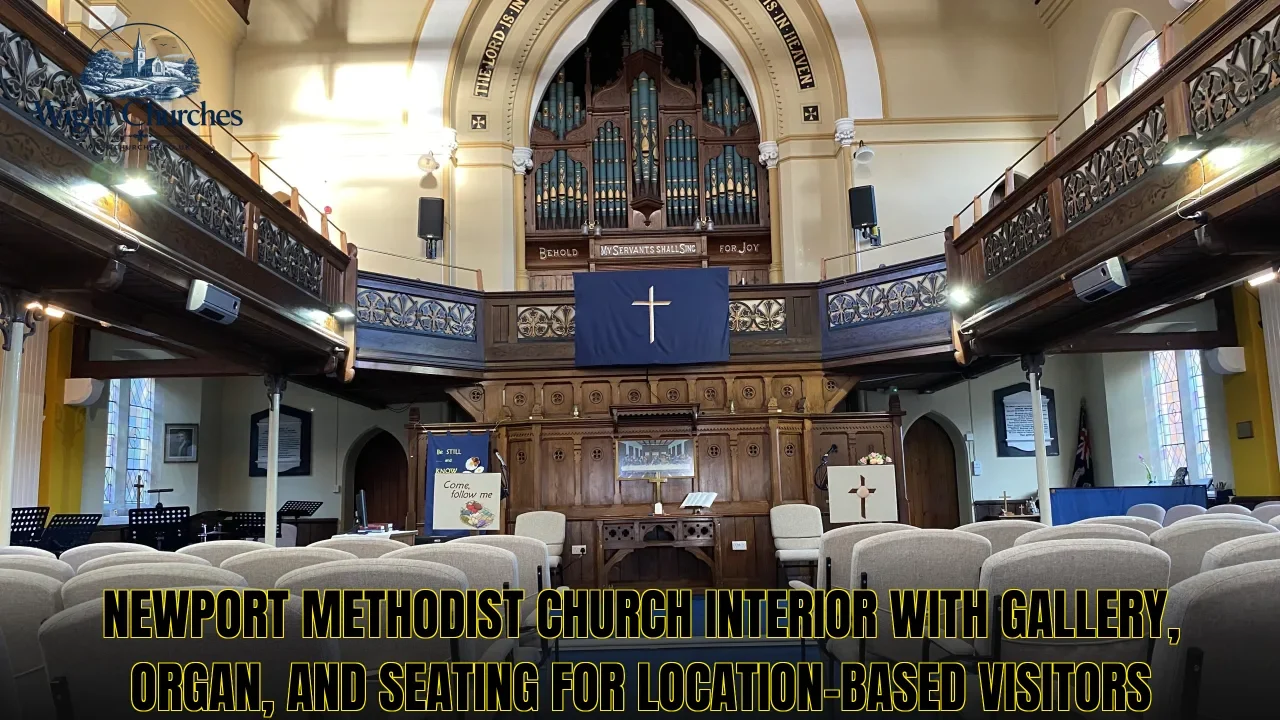
Organising churches by location rather than denomination or architectural period makes practical sense for most visitors. When you’re based in Newport, for example, it’s far more efficient to explore St Thomas the Apostle Church in the town centre before driving out to Carisbrooke’s St Mary the Virgin Church, which sits just a mile away. This approach to the churches in isle of wight by location guide ensures that no hidden gem is overlooked simply because of poor route planning. Proximity-based exploration also allows visitors to notice how local building materials, landscape, and community character influenced the design and atmosphere of each sacred space.
Understanding The Island’s Parish Boundaries And Deaneries
The Isle of Wight is divided into several historic parishes and deaneries under the Diocese of Portsmouth. These ecclesiastical boundaries broadly align with the island’s towns and villages, making them a useful secondary reference when using any churches in isle of wight by location guide. The Island Deanery encompasses the majority of Anglican congregations, while Roman Catholic, Methodist, and Baptist communities have their own distinct geographic distributions. Understanding these boundaries helps visitors appreciate why certain villages have multiple church buildings while others share a single congregation across several parishes.
Seasonal Access And Opening Hours By Region
Access to churches varies considerably depending on location and season. Coastal churches in towns like Cowes and Sandown tend to maintain more consistent opening hours due to higher visitor footfall, while rural churches in areas such as Shorwell or Brighstone may only open on specific days or for scheduled services. Any thorough churches in isle of wight by location guide should account for these practical realities. It’s always advisable to check directly with the relevant parish or local heritage organisation before visiting, particularly for smaller village churches that rely entirely on volunteer keyholders.
Key Churches Across The Island’s Main Regions
Breaking the island into distinct geographic zones reveals a fascinating pattern of religious architecture and community heritage. Each region has its own character, and the churches within them reflect the social and economic history of their surrounding settlements. The following overview draws on the most comprehensive churches in isle of wight by location guide resources available to help you navigate the island’s sacred landscape with confidence.
Northern Isle Of Wight: Ryde, Cowes, And East Cowes
The northern coast is the most densely populated part of the island, and its churches reflect both Victorian expansion and older medieval foundations. All Saints Church in Ryde is a striking Gothic Revival building constructed in the nineteenth century, while St Mary’s in Cowes serves one of the island’s most historic maritime communities. East Cowes is home to St James Church, which features notable stained glass windows and a well-preserved interior. These northern churches are highly accessible by ferry from the mainland, making them ideal starting points for any heritage itinerary built around the churches in isle of wight by location guide framework.
Central Isle Of Wight: Newport And Carisbrooke
Newport, the island’s capital, contains some of its most historically significant religious buildings. St Thomas the Apostle Church in Newport’s town centre dates to the thirteenth century and contains a memorial to Princess Elizabeth, daughter of King Charles I. Just outside Newport, Carisbrooke’s St Mary the Virgin Church is one of the oldest and most architecturally complete medieval churches on the island, featuring a magnificent tower visible from the famous castle nearby. These two sites alone justify a dedicated half-day exploration when following the churches in isle of wight by location guide.
Southern And Western Regions: Ventnor, Freshwater, And Rural Villages
The southern and western parts of the island contain some of its most atmospheric and least-visited churches. St Catherine’s Church in Ventnor overlooks the sea and offers breathtaking views alongside its Victorian architecture. In Freshwater, All Saints Church is closely associated with Alfred Lord Tennyson, who is buried in the churchyard. The rural villages of Shorwell, Brighstone, and Godshill each contain medieval churches of exceptional quality, with Godshill’s All Saints Church — perched dramatically on a hilltop — being one of the most photographed religious buildings in the entire county. Any complete churches in isle of wight by location guide must include these southern gems.
A Comparative Overview Of Notable Isle Of Wight Churches By Location
To help visitors plan effectively, the table below summarises key churches across the island, organised by geographic region. This reference tool complements the narrative sections of this churches in isle of wight by location guide and provides quick-access information for itinerary building.
| Church Name | Location | Region | Key Feature |
|---|---|---|---|
| All Saints Church | Ryde | North | Gothic Revival architecture |
| St Mary’s Church | Cowes | North | Maritime heritage connections |
| St Thomas the Apostle | Newport | Central | Princess Elizabeth memorial |
| St Mary the Virgin | Carisbrooke | Central | Medieval tower, castle proximity |
| All Saints Church | Freshwater | West | Tennyson burial site |
| All Saints Church | Godshill | South | Hilltop position, medieval frescoes |
| St Catherine’s Church | Ventnor | South | Coastal views, Victorian design |
| St Peter’s Church | Shorwell | Rural South-West | Fifteenth-century wall paintings |
This table is not exhaustive but represents a cross-section of the island’s most significant sacred sites. Each church listed here has been selected for its architectural merit, historical importance, or cultural association, all of which are explored in greater depth within the full churches in isle of wight by location guide available through dedicated heritage resources.
Conclusion
The Isle of Wight rewards those who approach it with curiosity and preparation. By using a well-structured churches in isle of wight by location guide, visitors can move purposefully between regions, uncovering medieval stonework, Victorian stained glass, literary connections, and living faith communities that continue to shape island life today. From the northern ferry ports to the rural southern villages, each church offers something genuinely distinct. For the most comprehensive and up-to-date information on every sacred site across the island, we encourage you to explore the full resources available at Wight Churches, your definitive online companion for heritage church exploration on the Isle of Wight.
Xem thêm: Best Churches To Visit In Isle Of Wight: A Complete Guide For History — best churches to visit in isle of wight